
 Hong Kong
 China
China
 India
India
 Korea
Korea
 Vietnam
 Singapore
 Kazakhstan
 Israel
 Qatar
Qatar
 UAE
UAE
 Germany
 Netherlands
 Austria
 Kenya
Kenya
 Rwanda
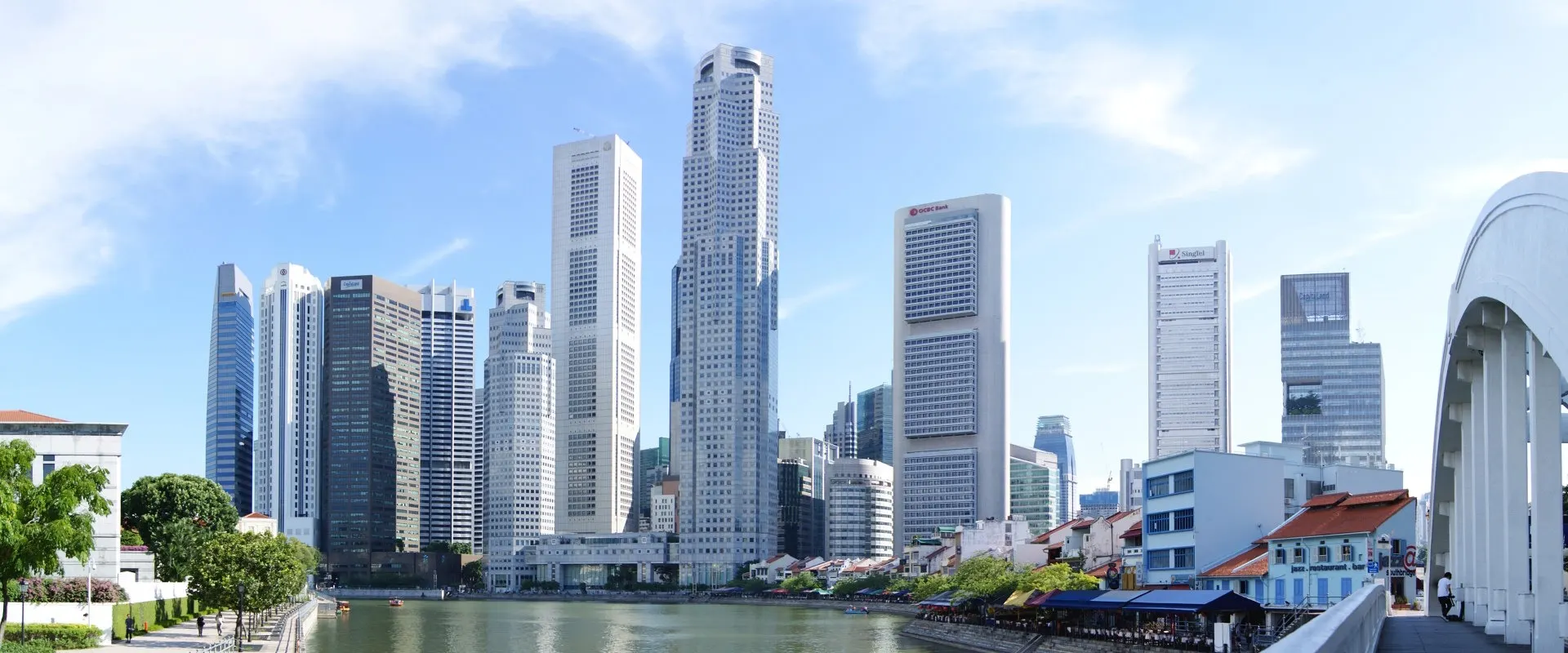
FinTech Licensing in Singapore: A Guide for Market Entrants
10.07.2025
Singapore's FinTech regulatory landscape is unusual in that almost every relevant licence sits under a single authority: the Monetary Authority of Singapore (MAS), which acts simultaneously as central bank, prudential supervisor, and financial regulator. For market entrants, that concentration is an advantage — one regulator, one set of engagement channels, and a consistent, innovation-friendly posture across payments, banking, capital markets, and insurance. This guide walks through the main licensing tracks a FinTech is likely to encounter, in general terms. It is educational in nature and not a substitute for legal or regulatory advice specific to your business model.
Payments: the Payment Services Act
Most FinTechs entering Singapore first meet MAS through the Payment Services Act (PSA), which consolidated what used to be several separate payments and money-changing laws into a single framework. The PSA regulates seven categories of activity: account issuance, domestic money transfer, cross-border money transfer, merchant acquisition, e-money issuance, digital payment token (DPT) services, and money-changing.
Licensing under the PSA is tiered by scale and risk rather than by activity type alone:
- Money-Changing Licence — for firms conducting money-changing only, the narrowest and most operationally simple track.
- Standard Payment Institution (SPI) — for firms operating below specified transaction-value thresholds across one or more of the regulated payment activities.
- Major Payment Institution (MPI) — required once monthly or daily transaction volumes exceed those thresholds, or for firms that intend to scale without an artificial volume cap. MPI licensees face closer supervision, including safeguarding requirements for customer funds.
Since 2024, MAS has also expanded the PSA's scope to bring more DPT (crypto) activity under licence, including DPT service providers based in Singapore but serving only overseas customers, alongside new user-protection and asset-segregation obligations for token custodians and exchanges. Any FinTech touching crypto custody, exchange, or transfer services should assume it needs a licence even if its customers are entirely offshore.
Digital banking: Full Bank vs. Wholesale Bank licences
Beyond payments, MAS opened up commercial banking itself to non-bank applicants through its digital bank licensing framework, introduced in 2019. Two licence types resulted: the Digital Full Bank (DFB) licence, which permits deposit-taking and banking services to retail and non-retail customers, and the Digital Wholesale Bank (DWB) licence, restricted to serving SMEs and other non-retail segments.
MAS awarded two DFB licences in December 2020 — to a Grab-Singtel consortium and to Sea Group — which now operate as GXS Bank and MariBank respectively. Two DWB licences went to what are now ANEXT Bank and Green Link Digital Bank, both focused on business banking. A fifth digital-first bank, Trust Bank — backed by Standard Chartered and FairPrice Group — operates under a conventional Full Bank licence rather than the digital bank framework, but competes directly in the same retail space. MAS has not signalled further digital bank licensing rounds, so new entrants targeting full deposit-taking should expect to partner with, or acquire, an existing licensed entity rather than apply for a fresh licence.
Capital markets: the CMS licence
Wealthtech and investtech businesses — robo-advisors, fund managers, brokerages, and platforms dealing in securities or collective investment schemes — typically fall under the Capital Markets Services (CMS) licence, issued under the Securities and Futures Act. The CMS licence covers a broad set of regulated activities, including fund management, dealing in capital markets products, providing custodial services for securities, and REIT management, each with its own licensing criteria and base capital requirement. Licensed fund management is the most common route for wealthtech entrants — Singapore-based platforms such as Endowus and StashAway operate under this regime. Smaller fund managers dealing only with accredited or institutional investors may instead qualify for the lighter-touch Registered Fund Management Company (RFMC) status rather than a full CMS licence.
Insurance and advisory: the FAA and Insurance Act
Insurtechs face a similar branching structure. Selling, underwriting, or distributing insurance products requires authorisation under the Insurance Act, either as a licensed insurer or as an insurance broker or intermediary. Where a platform also gives advice on insurance or investment products rather than simply distributing them, it typically also needs authorisation under the Financial Advisers Act (FAA). It is common for a single insurtech or wealthtech platform to hold both a financial adviser's licence and an exempt insurance broker registration simultaneously, since advisory and distribution activities are regulated separately even when delivered through the same app.
Testing before you commit: the regulatory sandbox
MAS is widely regarded as one of the more engagement-first regulators in Asia, and its regulatory sandbox framework reflects that reputation. The standard FinTech Regulatory Sandbox allows firms to test novel products or business models in a live environment with relaxed regulatory requirements for a defined period, negotiated case by case with MAS. Sandbox Express, a faster-track option, targets a small set of pre-defined, lower-risk activities — such as insurance broking or remittance — with standardised conditions and a much shorter time-to-market than a full licence application. Neither sandbox track removes the eventual need for a full licence if the business proves out; both are best understood as a way to validate a model with MAS before committing to the complete licensing process.
What licensing actually involves
Across every track above, MAS applies a consistent set of underlying expectations rather than a single checklist. Applicants and their key officers and controllers must satisfy MAS's "fit and proper" criteria — covering competence, financial soundness, and integrity — regardless of which licence is being sought. Base capital requirements scale with the licence type and risk profile: publicly documented examples include S$100,000 for a Standard Payment Institution and S$250,000 for a Major Payment Institution licence, with different, activity-specific thresholds under the CMS regime. MAS also generally expects licensed entities to maintain a genuine local presence — a Singapore-incorporated entity, at least one locally based executive officer, and a physical office — rather than operating purely as a branch of an offshore business. Applicants should treat published thresholds as indicative rather than final, since MAS periodically revises them, and should confirm current requirements directly against MAS's own guidelines before applying.
Singapore's licensing regime is thorough, but it is also unusually navigable for a market of its sophistication: a single regulator, published guidelines for most licence classes, and a sandbox pathway for testing ideas before a full application. That combination is a large part of why Singapore remains one of Asia's most active FinTech hubs.
► View the complete list of FinTechs operating in Singapore across every regulated category
► View our live, up-to-date statistics for Singapore — company counts, funding, and categories
► Explore FinTech Consult's market entry services for guidance navigating MAS licensing and Singapore market entry